Search This Blog

Showing posts with label World. Show all posts

NATO Phonetic Alphabet

Jul 13, 2014

The NATO phonetic alphabet, more accurately known as the International Radiotelephony Spelling Alphabet and also called the ICAO phonetic or ICAO spelling alphabet, as well as the ITU phonetic alphabet, is the most widely used spelling alphabet. Although often called "phonetic alphabets", spelling alphabets are not associated with phonetic transcription systems such as the International Phonetic Alphabet. Instead, the International Civil Aviation Organization (ICAO) alphabet assigned code words acrophonically to the letters of the English alphabet so that critical combinations of letters and numbers can be pronounced and understood by those who transmit and receive voice messages by radio or telephone regardless of language barriers or the presence of transmission static.

The 26 code words in the NATO phonetic alphabet are assigned to the 26 letters of the English alphabet in alphabetical order as follows: Alfa, Bravo, Charlie, Delta, Echo, Foxtrot, Golf, Hotel, India, Juliett, Kilo, Lima, Mike, November, Oscar, Papa, Quebec, Romeo, Sierra, Tango, Uniform, Victor, Whiskey, X-ray, Yankee, Zulu.

Code words


USMC NATO Phonetic Alphabet CommunicationsThe final choice of code words for the letters of the alphabet and for the digits was made after hundreds of thousands of comprehension tests involving 31 nationalities. The qualifying feature was the likelihood of a code word being understood in the context of others. For example, football has a higher chance of being understood than foxtrot in isolation, but foxtrot is superior in extended communication.

The pronunciation of the code words varies according to the language habits of the speaker. To eliminate wide variations in pronunciation, recordings and posters illustrating the pronunciation desired by the ICAO are available. However, there are still differences in pronunciation between the ICAO and other agencies, and the ICAO has conflicting Roman-alphabet and IPA transcriptions. Also, although all codes for the letters of the alphabet are English words, they are not in general given English pronunciations. Assuming that the transcriptions are not intended to be precise, only 11 of the 26—Bravo, Echo, Hotel, Juliet(t), Kilo, Mike, Papa, Quebec, Romeo, Whiskey, and Zulu—are given English pronunciations by all these agencies, though not always the same English pronunciations.

Letters

LetterCode wordUS Army standard
AAlfa ATIS: AlphaAL fah
BBravoBRAH voh
CCharlieCHAR lee
DDeltaDEL tah
EEchoEKK oh
FFoxtrotFOKS trot
GGolfGolf
HHotelHO tell
IIndiaIN dee ah
JJuliett ATIS: JulietJEW lee ett
KKiloKEY loh
LLimaLEE mah
MMikeMike
NNovemberNOH vem ber
OOscarOSS car
PPapaPAH pah
QQuebeckeh BECK
RRomeoROW me oh
SSierrasee AIR ah
TTangoTANG go
UUniformYOU nee form
VVictorVIK ter
WWhiskeyWISS key
XX-ray or XrayEKS ray
YYankeeYANG kee
ZZuluZOO loo
-
(hyphen)
DashDASH

Digits

DigitCode wordPronunciation
0ZeroZEE-RO
1OneWUN
2TwoTOO
3ThreeTREE
4FourFOW-ER
5FiveFIFE
6SixSIX
7SevenSEV-EN
8EightAIT
9NinerNIN-ER
100HundredHUN-dred
1000ThousandTOU-SAND
.
(decimal point)
DecimalDAY-SEE-MAL
.
(full stop)
StopSTOP


United Nations' International Day of Persons with Disabilities

Nov 16, 2013

International Day of People with Disability (December 3) is an international observance promoted by the United Nations since 1992. It has been celebrated with varying degrees of success around the planet. The observance of the Day aims to promote an understanding of disability issues and mobilize support for the dignity, rights and well-being of persons with disabilities. It also seeks to increase awareness of gains to be derived from the integration of persons with disabilities in every aspect of political, social, economic and cultural life. It was originally called "International Day of Disabled Persons". Each year the day focuses on a different issue.

For more information visit: International Day of Persons with Disabilities, 3 December 2013

Background


Over one billion people, or approximately 15 per cent of the world’s population, live with some form of disability.

Persons with disabilities, “the world’s largest minority”, often face barriers to participation in all aspects of society. Barriers can take a variety of forms, including those relating to the physical environment or to information and communications technology (ICT), or those resulting from legislation or policy, or from societal attitudes or discrimination. The result is that persons with disabilities do not have equal access to society or services, including education, employment, health care, transportation, political participation or justice.

Around the world, persons with disabilities face physical, social, economic and attitudinal barriers that exclude them from participating fully and effectively as equal members of society. They are disproportionately represented among the world’s poorest, and lack equal access to basic resources, such as education, employment, healthcare and social and legal support systems, as well as have a higher rate of mortality. In spite of this situation, disability has remained largely invisible in the mainstream development agenda and its processes.

Evidence and experience shows that when barriers to their inclusion are removed and persons with disabilities are empowered to participate fully in societal life, their entire community benefits. Barriers faced by persons with disabilities are, therefore, a detriment to society as a whole, and accessibility is necessary to achieve progress and development for all.

Earlier, the international disability movement achieved an extraordinary advance in 2006, with the adoption of the Convention on the Rights of Persons with Disabilities. The Convention follows decades of work by the United Nations to change attitudes and approaches to disability that would ensure the full equality and participation of persons with disabilities in society. The Convention is intended as a human rights instrument with an explicit, development dimension. However, to realize equality and participation for persons with disabilities, they must be included in all development processes and, now more importantly, in the new emerging post-2015 development framework.

The Convention on the Rights of Persons with Disabilities (CRPD) recognizes that the existence of barriers constitutes a central component of disability. Under the Convention, disability is an evolving concept that “results from the interaction between persons with impairments and attitudinal and environmental barriers that hinder their full and effective participation in society on an equal basis with others.”

Accessibility and inclusion of persons with disabilities are fundamental rights recognized by the CRPD and are not only objectives, but also pre-requisites for the enjoyment of other rights. The CRPD (Article 9, accessibility) seeks to enable persons with disabilities to live independently and participate fully in all aspects of life and development. It calls upon States Parties to take appropriate measures to ensure that persons with disabilities have access to all aspects of society, on an equal basis with others, as well as to identify and eliminate obstacles and barriers to accessibility.

In spite of this, in many parts of the world today, lack of awareness and understanding of accessibility as a cross-cutting development issue remains an obstacle to the achievement of progress and development through the Millennium Development Goals, as well as other internationally agreed outcomes for all.

It’s It’s time to effectively implement the Outcome Document of the High Level Meeting and to break barriers and open doors: to realize an inclusive society and development for all!


The commemoration of this year’s International Day of Persons with Disabilities provides an opportunity to further raise awareness of disability and accessibility as a cross cutting development issue and further the global efforts to promote accessibility, remove all types of barriers, and to realize the full and equal participation of persons with disabilities in society and shape the future of development for all!

What you can do to observe IDPD2013

Include: Observance of the Day provides opportunities for participation by all stakeholders – Governments, the UN system, civil society and organizations of persons with disabilities – to focus on issues related to the inclusion of persons with disabilities in development, both as beneficiaries and agents.

Organize: Hold forums, public discussions and information campaigns to help find innovative ways and means by which persons with disabilities and their families can be further integrated into their societies and development plans.

Celebrate: Plan and organize performances everywhere to showcase - and celebrate - the contributions made by persons with disabilities as agents of change and development in the communities in which they live.

Take Action: A major focus of the Day is practical and concrete action to include disability in all aspects of development, as well as to further the participation of persons with disabilities in social life and development on the basis of equality. Highlight progress and obstacles in implementing disability-sensitive policies, as well as promote public awareness to break barriers and open doors: for an inclusive society for all.


Themes from previous years


  • 1998: "Arts, Culture and Independent Living"
  • 1999: "Accessibility for all for the new Millennium"
  • 2000: "Making information technologies work for all"
  • 2001: "Full participation and equality: The call for new approaches to assess progress and evaluate outcome"
  • 2002: "Independent Living and Sustainable Livelihoods"
  • 2003: "A Voice of our Own"
  • 2004: "Nothing about Us, Without Us"
  • 2005: "Rights of Persons with Disabilities: Action in Development"
  • 2006: "E-Accessibility"
  • 2007: "Decent Work for Persons with Disabilities"
  • 2008: "Convention on the Rights of Persons with Disabilities: Dignity and justice for all of us"
  • 2009: "Making the MDGs Inclusive: Empowerment of persons with disabilities and their communities around the world"
  • 2010: "Keeping the promise: Mainstreaming disability in the Millennium Development Goals towards 2015 and beyond" 
  • 2011: "Together for a better world for all: Including persons with disabilities in development"
  • 2012: "Removing barriers to create an inclusive and accessible society for all"
  • 2013: "Break barriers, open doors: for an inclusive society for all"

Do we need industrial livestock farming to feed the world?

Jul 10, 2013


Do we need industrial livestock farming to feed the world? Just the opposite!

“The best way to end factory farming is to make the system transparent and accountable, and to align agribusiness practices with our citizens’ values and interests. The cruelty of industrial animal agriculture is an affront to basic human decency. It is inefficient, unhealthy and unsustainable.

- Gene Baur

What can we do individually about it on a microscale?
● Do not eat meat seven days a week.
● Buy local organic foods.
● Buy sustainably harvested seafood.

Facts and Numbers: (Source ➜ goo.gl/umQLf)
● More than two-thirds of all agricultural land is devoted to growing feed for livestock, while only 8 percent is used to grow food for direct human consumption.
● About two to five times more grain is required to produce the same amount of calories through livestock as through direct grain consumption.
● 30 percent of the total land area of the world is used in pasture land and in the production of food for animals on a feedlot system.
● Livestock farming in the United States contributes to nearly three-quarters of all water-quality problems in the nation’s rivers and streams.
● Livestock production accounts for 18% of global greenhouse gas emissions, including 9% of carbon dioxide and 37% of methane gas emissions worldwide.

“The unnecessary torture and abuse of other animals is one of the worst human atrocities of our time. Humanity's self-aggrandizing misconception that humans rule the world with no moral responsibilities to those with whom we share this planet is reinforced by how we treat other animals, and this ironic view is facilitating destruction of the planet even for ourselves.”

- Kyle Ash

Religious Pilgrimages of the World

Sep 25, 2012

Saudi Arabia
Vatican City
Nepal
Japan
Jerusalem
America

Weed's Social Political Implications

Aug 8, 2012

Poor misguided hippies. Spewing their misinformed political views on marijuana and it's social impacts. "It's not hurting anyone" they say, whether the cognitive association part of a stoner's brain is being severely retarded or they just don't care about anything other than themselves.

Drugs indeed hurt people, let's take marijuana for example, it is owned and operated by organized crime. Hippies advocate distrust in the greedy government and big businesses and do drugs because it's a natural none conformist way of living that doesn't hurt anyone. From my point of view, doing drugs is effectively funding the organized crime world, who in turn use the profits from drug sales to fund even worse crimes. Buying guns and weapons.

But could any other outcome have come from the governments war on marijuana? They've been funding the anti-weed war since the beginning of the 1900's, pouring billions into the propaganda with little to no victory to show for it. Of course organized crime found and exploited the market of marijuana, just look at the history of the alcohol prohibition, the crime syndicates bootlegged booze and made a fortune from the illegal activities. While citizens are being prosecuted for drug use and unable to acquire the substance from anywhere other than the criminals, the criminal community will continue to profit from drug operations. The war on drugs has not worked and perhaps needs a new method of operation.

Sure, the government could simply legalize the weed, certified corporations would  take over the market and run the crime syndicates out of the industry in a matter of months. And under the government regulations of the new drug industry, the government will be able to collect a fortune in taxes, special fees and all the other benefits of capitalism. Adopting the legal practices of some countries around the world that legalize marijuana, treating it similar to alcohol, with age limits, volume regulations, location usage, public decency, etc. It might work, it might be worth review by government officials and law makers. Perhaps in a way the medicinal practices are already a step in this direction, however I've heard a lot about doctors giving prescriptions to just about anyone without a legitimate medical reason, but that might just be a bunch of nonsense.

Living in 'CA' Rocks

Aug 6, 2012

So the area code 'CA' is that supposed to be Canada or California (An American State)?

For example Canada is a county and therefore has presidency over a single state. But then again, from the 2011 census California, USA has a greater population by 3,209,133 people, that's like 91% of California's population is equal to the entire Canadian population.

So as a Canadian I tend to assume CA is short for Canada, unless there is reference to American material then chances are the abbreviation is being used for California.

Canada 34,482,779 - 2011

California 37,691,912 - 2011

If one of the 50 American states' population outnumber all of Canada, then Canada has very few people in comparison to The United States, but then considering there are billions and billions of people residing in densely concentrated cities in only a few Eastern countries then by relation the US isn't overly populated, and Canada is practically empty, this is nice, it feels like Canada is the first class of the global community. Tons of leg room, fresh air, pretty of food and resources, life is sweet.


International Prison Idea

Aug 5, 2012

China has possibly the densest humans per square mile out of any country in the world. Thus land is a scarce resource. China, like all nations has criminals and fiends that must be removed from the general public. China and North Korea are allied nations. In many ways, N. Korea is to China as Cuba is to the United States. Could it be a good idea for China, in collaboration with N. Korea to build a maximum security prison in Korea for the most hardened criminals, terrorists and public enemies?

Building China's max security prison on North Korean land would have many benefits to both nations. It would free up space in China that could be used for better things. Bring many jobs to Korea, especially in the construction field which could then be used to develop the nation's own infrastructure, and Korean's along with Chinese personal could be employed as guards, wardens and many other positions that would have many lasting benefits. Also the laws China has for it's prisoners could be usurped while on N. Korean land thus granting the government limited restrictions that could be very important especially in time sensitive cases.

But why not take it a step further, why not build a bigger better prison, a prison owned and operated by all nations so the United Nations, where all of the world's worst foremost criminals could be sent. Having a unified set of rules on the treatment of prisoners and streamlining the operations of this prison institute. Perhaps it could be on an island somewhere, maybe it would need to be in international waters, but that would make things more difficult because transporting back and forth would be more expensive and time consuming, but it would make securing the island more effective and be better for securing international ownership issues because it wouldn't be in any one nation's border.

Perhaps the idea of a UN prison wouldn't be as easy as it sounds. Sure the United Nations do good work is regulating the worlds nations and organizing global coordination. But for the whole world to agree on the operations of a prison, that might be a stretch from their ability. Countries around the world have a wide array of methods for their prisons, both ethical, legal, social and so forth that will conflict and possibly tear the project apart. Also there isn't any real need for such a prison, and the dispute of financing the project, the world economic states right now isn't one that should be spending on a new jail right now.

The Olympic Games

Jul 31, 2012

The Olympic Games is a major international event featuring summer and winter sports, in which thousands of athletes participate in a variety of competitions. The Olympic Games are considered to be the world's foremost sports competition and more than 200 nations participate. The Games are currently held biennially, with Summer and Winter Olympic Games alternating, meaning they occur every four years within their respective seasonal games. Originally, the ancient Olympic Games were held in Olympia, Greece, from the 8th century BC to the 4th century AD. Baron Pierre de Coubertin founded the International Olympic Committee (IOC) in 1894. The IOC has since become the governing body of the Olympic Movement, whose structure and actions are defined by the Olympic Charter.

The evolution of the Olympic Movement during the 20th and 21st centuries has resulted in several changes to the Olympic Games. Some of these adjustments include the creation of the Winter Games for ice and winter sports, the Paralympic Games for athletes with a physical disability, and the Youth Olympic Games for teenage athletes. The IOC has had to adapt to the varying economic, political, and technological realities of the 20th century. As a result, the Olympics shifted away from pure amateurism, as envisioned by Coubertin, to allow participation of professional athletes. The growing importance of the mass media created the issue of corporate sponsorship and commercialization of the Games. World Wars led to the cancellation of the 1916, 1940, and 1944 Games. Large boycotts during the Cold War limited participation in the 1980 and 1984 Games.

The Olympic Movement consists of international sports federations (IFs), National Olympic Committees (NOCs), and organizing committees for each specific Olympic Games. As the decision-making body, the IOC is responsible for choosing the host city for each Olympic Games. The host city is responsible for organizing and funding a celebration of the Games consistent with the Olympic Charter. The Olympic program, consisting of the sports to be contested at the Games, is also determined by the IOC. The celebration of the Games encompasses many rituals and symbols, such as the Olympic flag and torch, as well as the opening and closing ceremonies. Over 13,000 athletes compete at the Summer and Winter Olympics in 33 different sports and nearly 400 events. The first, second, and third place finishers in each event receive Olympic medals: gold, silver, and bronze, respectively.

The Games have grown in scale to the point that nearly every nation is represented. Such growth has created numerous challenges, including boycotts, doping, bribery, and terrorism. Every two years, the Olympics and its media exposure provide unknown athletes with the chance to attain national, and in some cases, international fame. The Games also constitute a major opportunity for the host city and country to showcase themselves to the world.

Currencies of the World


World Population of Humans

Jul 14, 2012

There are a few sites on the web that offer real time statistics on the worlds population. This is really cool, they use some kind of complex mathematical projection models that I don't understand but I can appreciate their significance. How accurate these population counters are I don't know, it's not like everyone on the planet is chiped and tagged (at least for now) but I've found a few of them that are very close so if one is off by a few million it's no big deal.


As of July 13, 2012


What was the population of the world in the past and when will world population reach 8 billion? 
 
The chart above clearly illustrates how world population has changed in history. The US Census Bureau has assembled a table with estimated population from 10000 BC to 1950 according to different sources.
At the dawn of agriculture, about 8000 B.C., the population of the world was approximately 5 million. Over the 8,000-year period up to 1 A.D. it grew to 200 million (some estimate 300 million or even 600, suggesting how imprecise population estimates of early historical periods can be), with a growth rate of under 0.05% per year.
A tremendous change occurred with the industrial revolution: whereas it had taken all of human history until around 1800 for world population to reach one billion, the second billion was achieved in only 130 years (1930), the third billion in less than 30 years (1959), the fourth billion in 15 years (1974), and the fifth billion in only 13 years (1987). During the 20th century alone, the population in the world has grown from 1.65 billion to 6 billion.
Year Population
1 200 million
1000 275 million
1500 450 million
1650 500 million
1750 700 million
1804 1 billion
1850 1.2 billion
1900 1.6 billion
1927 2 billion
1950 2.55 billion
1955 2.8 billion
1960 3 billion
1965 3.3 billion
1970 3.7 billion
1975 4 billion
1980 4.5 billion
1985 4.85 billion
1987 5 billion
1990 5.3 billion
1995 5.7 billion
1999 6 billion
2000 6.1 billion
2005 6.45 billion
2010 6.8 billion
2011 7 billion
2020 7.6 billion
2027 8 billion
2030 8.2 billion
2040 8.8 billion
2046 9 billion
2050 9.2 billion


How fast is the world population growing right now?
Population in the world is currently growing at a rate of around 1.10% per year. The average population change is currently estimated at around 75 million per year.
Annual growth rate reached its peak in the late 1960s, when it was at 2% and above. The rate of increase has therefore almost halved since its peak of 2.19 percent, which was reached in 1963, to the current 1.15%.

The annual growth rate is currently declining and is projected to continue to decline in the coming years, but the pace of the future change is uncertain. Currently, it is estimated that it will become less than 1% by 2020 and less than 0.5% by 2050.


How is the population distributed around the world? 

Refer to this population density map:

Money Faces

Jul 10, 2012


History of Religion 5000 Years in 90 Seconds

Jun 26, 2012

How has the geography of religion evolved over the centuries, and where has it sparked wars? Illustrating a brief history of the world's most well-known religions: Christianity, Islam, Hinduism, Buddhism, and Judaism. Selected periods of inter-religious bloodshed are also highlighted. Want to see 5,000 years of religion in 90 seconds? Ready, Set, Go!


fullscreen *View Full Screen

National Leaders Tree Solution

Jun 24, 2012

Answers to where the 10 recognized faces reside. The likeliness and subjects are however not given due to the nature of the illustrations origins.

Try the original image without solutions here, National Leader Tree.
National Leaders Tree cheat answer given proof. Origin, artist, solution.
National Leaders Tree Solution

- 10 National Leaders
- 1 Hidden face


National Leaders Tree Solution

The National Leaders Tree was drawn in the 1880's by an unnamed illustrator for Harper's Illustrated. It has been variously claimed to represent Indian leaders, South American leaders, and Russian leaders. It originally was meant to illustrate British leaders.

The reason for this illustration to be applicable over such a span in time makes me think of how people want to see meaning in everyday occurrences. It is very interesting. Because the creator is unnamed and from long ago we cannot look to him/her to tell us who the faces were meant to depict, perhaps they were intentionally done in a way that could be construed as many different people with the intent that the representation exceed any individuals and develop a life of its very own.

National Leaders Tree

I came across this spot the object illusion, much like many others, but really good. Not only do you have to spot all the faces in this tree below, you also have to guess who they represent. Since the image is called “National Leaders Tree“, you are right in thinking that the faces represent leaders of the big countries like America, Russia, England, Yugoslavia etc. How many faces can you spot?

After you've found them all, you can check National Leader Tree Solution.

National Leaders Tree

How many faces do you see?

Jim Yong Kim Secures World Bank Job

Jun 20, 2012

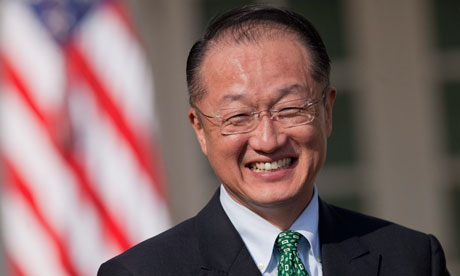
The World Bank said in a statement: 'We all look forward to working with Dr Kim when he assumes his responsibilities.' Photograph: Andrew Harrer/EPA

Following up on a previous post, here.

The World Bank named Jim Yong Kim as its next president, maintaining a seven-decade U.S. lock on the post after the first challenge by candidates from other countries.

Dr. Kim said after his election on Monday that laying the groundwork for job creation would be his top priority, as the institution faces pressure to shift from making loans to supporting broader economic concerns.

"In every single country I've been to, they are really hoping private-sector growth can happen quickly so that jobs can be created," said Dr. Kim.
The World Bank named Korean-born doctor Jim Yong Kim as its new president today amid criticism that the role had once more gone to a US-nominated candidate.

The 52-year-old president of Ivy League college Dartmouth beat Nigerian finance minister Ngozi Okonjo-Iweala to the post, the first time in the World Bank's history that the US candidate has faced a serious challenge.

US president Barack Obama nominated Kim to replace current World Bank chief Robert Zoellick in March. Kim, who was born in Seoul, the South Korean capital, is a public health expert – a change from the bank's usual nomination of candidate from the financial world.

The US backed France's Christine Lagarde's nomination to the top role at the IMF last year after the shock resignation of Dominique Strauss-Kahn. In return, Kim received Europe's backing for the World Bank job.

But in recent years the organisations have faced growing criticism over their US/European duopoly. Ahead of the announcement, Okonjo-Iweala said: "You know this thing is not really being decided on merit."

"It is voting with political weight and shares, and therefore the United States will get it," she told reporters at a briefing on the country's 2012 budget.

In a statement, the World Bank said: "We, the executive directors, wish to express our deep appreciation to all the nominees, Jim Yong Kim, José Antonio Ocampo and Ngozi Okonjo-Iweala. Their candidacies enriched the discussion of the role of the president and of the World Bank group's future direction. The final nominees received support from different member countries, which reflected the high calibre of the candidates. We all look forward to working with Dr Kim when he assumes his responsibilities."


Venus Alignment between The Earth and Sun

Jun 4, 2012

A transit of Venus occurs when Venus passes directly between the sun and earth.  This alignment is rare, coming in pairs that are eight years apart but separated by over a century. 

The most recent transit of Venus was a thrilling sight in 2004.  After the June 2012 transit of Venus (the last one in your lifetime), the next such alignment occurs in 2117.


Location, location, location.

Whether and when you can see the 2012 transit of Venus depends on your location.  Key highlights include the four "contacts" near the beginning and end of the transit when Venus appears to touch the edge of the sun.  Most of North America sees the beginning of the transit in the afternoon and evening (find a clear western horizon!) on June 5, whereas much of Eurasia sees the end of the transit in the morning (find a clear eastern horizon!) on June 6.

Please install latest Flash Player to run SunAeon Venus Transit 2012

So, is the transit of Venus visible June 5 or June 6?

It depends on your time zone.  Generally, for the Americas where it is visible (blue colors on map below) the 2012 transit occurs the evening of Tuesday, June 5, 2012.  For Eurasia and Africa where it is visible (sage colors on map), the latter part of the transit is seen the morning of June 6, 2012.  Map courtesy of Steven van Roode.


Holy Week

Mar 27, 2012

Holy Week begins Sunday, April 1, 2012, and ends Saturday, April 7, 2012.

Holy Week from the Greek meaning Greater Week in Christianity is the last week of Lent and the week before Easter. It includes the religious holidays of Palm Sunday, Maundy Thursday (Holy Thursday), Good Friday, and Holy Saturday. It does not include Easter Sunday. In Eastern Orthodox tradition, Holy Week starts on Lazarus Saturday, the day before Palm Sunday. (Easter Sunday, for context, is the first day of the new season of the Great Fifty Days, or Eastertide, there being fifty days from Easter Sunday to Pentecost Sunday.)

Mexico
So Holy Week is also supposed to be the hottest week of the year down in Mexico, it's a national holiday and the vacation plans are cheep. All inclusive all week is supposed to be about seven hundred dollars. But the resorts are very crowded. But the more expensive resorts shouldn't have any locals because its like three thousand dollars a week. 

Jim Yong Kim to Be Named to World Bank Post

Mar 23, 2012


President Barack Obama picked Dartmouth College President Jim Yong Kim as the U.S. nominee to lead the World Bank, choosing a global-health expert to head the development institution. Dr. Kim, an American physician who was born in South Korea, moved to and raised in Iowa at five.

"Jim has spent more than two decades working to improve conditions in developing countries around the world," Mr. Obama said Friday. "It's time for a development professional to lead the world's largest development agency." Dr. Kim, 52, became Dartmouth's president in July 2009. He is a former director of the Department of HIV/AIDS at the World Health Organization, where he launched an initiative to treat 3 million patients living with HIV. He holds a medical degree and a doctorate in anthropology, both from Harvard University, and an undergraduate degree from Brown University.

The White House's pick is nearly certain to become the next World Bank president after its current leader, Robert Zoellick, steps down as planned in late June after a five-year term.

Direct From WSJ